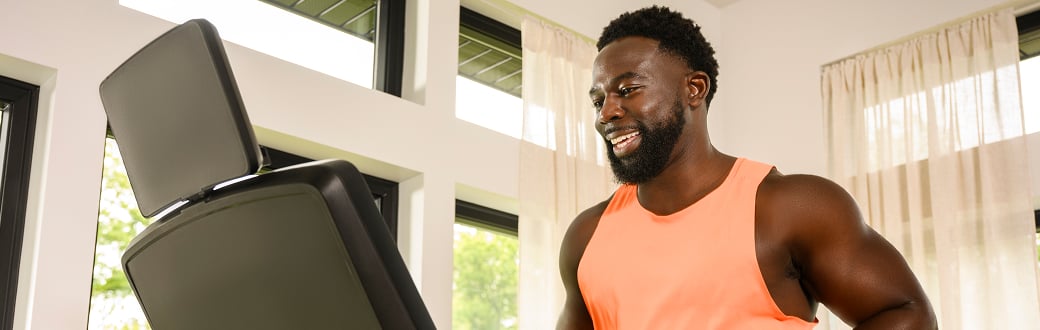

Incline Walking: A Low-Impact Way to Support Longevity
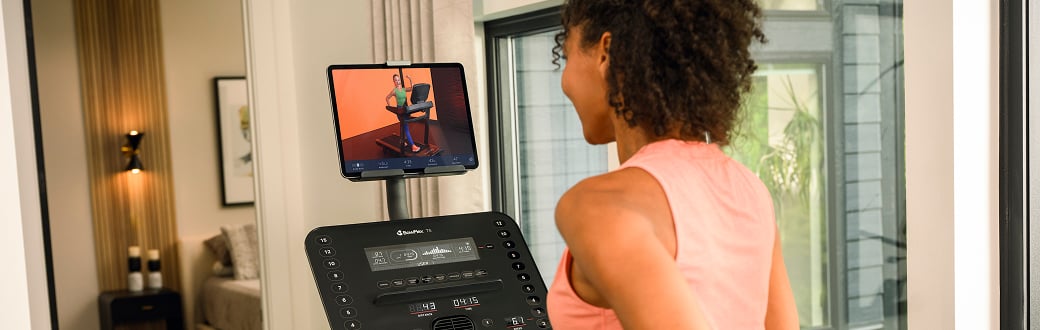
If you've been overlooking the incline button on your treadmill, it's time to reconsider.
Incline walking is one of the most effective, joint-friendly, and accessible forms of cardio. Whether you're new to fitness, returning after a break, or simply looking for a smarter way to train for the long haul, this guide covers everything you need to know: what it is, why it works, the best treadmills for incline walking, and workouts you can try today.
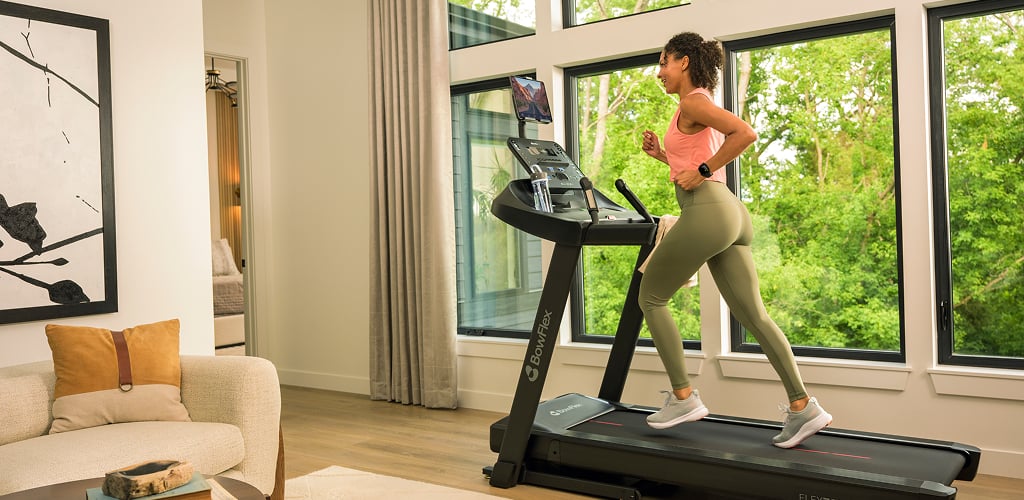
What Is Incline Walking?
Incline walking is exactly what it sounds like: walking on a treadmill, or outdoors, at an elevated angle. On a treadmill, incline is measured as a percentage, with 0% being completely flat, 1% mimicking the natural resistance of walking outdoors, and 5-15% simulating a moderate to steep hill.
Here's what makes it powerful: even a small increase in incline significantly boosts how hard your body is working. Walking on an incline raises your heart rate, deepens your breathing, and engages more muscles across your lower body and core — all without your feet ever leaving the belt.
Why Incline Walking Works: Key Benefits
It Builds Lower Body Strength and Endurance
Incline walking isn't just an effective form of cardio. It actively strengthens your glutes, hamstrings, calves, and hip flexors. The uphill angle places greater demand on your posterior chain (aka the muscles running along the back of your body), which are essential for posture and stability. Over time, consistent incline walking builds important lower body endurance that makes everyday movement feel easier (think: walking up stairs, bending over, or standing up).
It Challenges Your Cardiovascular System
At a 10-15% incline, your heart and lungs are working hard. Incline walking builds your aerobic fitness and cardiovascular endurance in a way that's sustainable over time, so you finish each session feeling accomplished and capable, not depleted.
It's Easier on Your Joints
Unlike running, which puts significant impact on your knees, hips, and ankles with every stride, walking is a low-impact activity. That makes it an ideal long-term cardio option for people with joint issues, those returning from injury, or anyone who simply wants to train smarter and stay active for decades to come.
It Works for Every Fitness Level
Whether you're just getting started or you've been training for years, incline walking can be adapted to your current fitness level. Beginners can start with a smaller incline on the treadmill or a shorter distance goal and build from there. Consistent exercisers can use steep inclines for active recovery days, or as a lower-impact alternative to high-intensity cardio sessions.
What Incline Should I Walk At?
If you're wondering how steep you should set the incline on your treadmill, the answer really depends on what you're trying to accomplish. Here's a quick breakdown:
- Active recovery: 1-2% incline at 2-2.5 mph speed
- General health/daily movement: 1-3% incline at 2.5-3.5 mph speed
- Cardiovascular endurance: 5-8% incline at 3-4 mph speed
- Glute and leg strength: 9-15% incline at 2.5-3.5 mph speed
Reminder: As incline increases, focus on keeping your core engaged, your posture upright, and let your arms swing naturally.
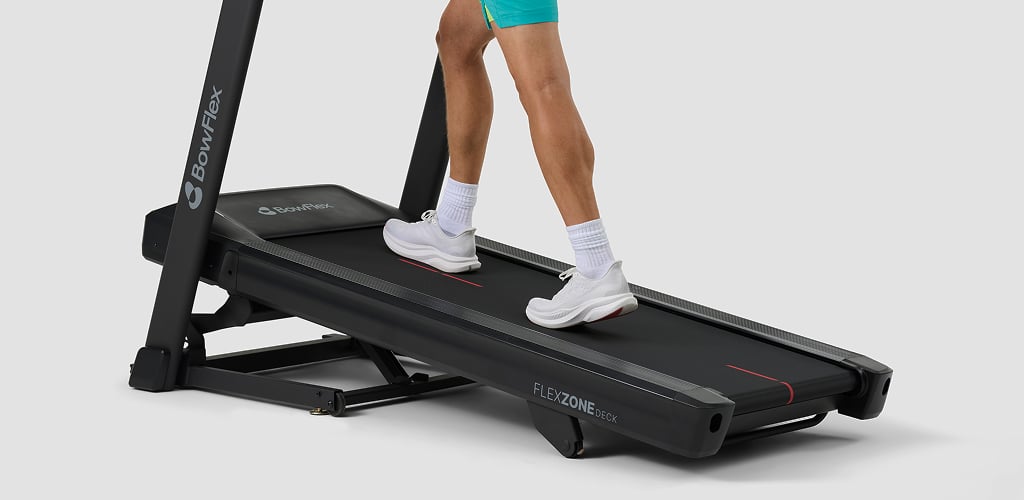
The Best Treadmills for Incline Walking
To get the most out of incline walking at home, you need a treadmill with a wide incline range, responsive controls, and a comfortable deck that supports your joints.
BowFlex T6 Treadmill
The T6 is the ideal entry point for incline walking enthusiasts. It offers up to 15% motorized incline and a speed range of 0.5 to 12 mph. What truly sets it apart is the MaxReact™ Drive System, which responds instantly when you change your incline or speed — no lags. The FlexZone™ Deck System absorbs impact with every step, making it noticeably easier on your joints.
Unlike other connected treadmills, the T6 doesn't require a subscription to use — but it does pair with popular fitness apps when you're ready to train with JRNY, Peloton, or Zwift, as well as Apple Watch and Samsung Watch to keep your metrics in sync.
BowFlex T16 Treadmill
If you're looking for a more immersive experience, the T16 brings premium performance features and entertainment to every incline walk. It features a spacious 22” x 60” deck, cushioning, and ultra-responsive controls that make it effortless to adjust incline (and speed) on the fly. Where it stands apart is the 16" HD touchscreen console. Access JRNY for trainer-led classes and Explore the World scenic routes, scroll social media, or stream Netflix, Prime Video, and Spotify directly from the console. If you're serious about making incline walking a long-term part of your routine, the T16 is built for exactly that.
Incline Walking Workouts to Try on a Treadmill
These workouts are designed to be done on the treadmill. Adjust the speed ranges to suit your current fitness level and level up when you're ready for a challenge.
20-Minute Steady Incline Walk
Best for: those new to incline walking or returning to exercise after a break
- Warm Up: Walk at slow pace (~2.5 mph speed) at a 1% incline for 3 minutes
- Steady Climb: Increase the incline to 5% and speed to 3-3.5 mph for 14 minutes
- Cool Down: Bring the speed back down to 2.5 mph and incline to 1% for 3 minutes
This is a great incline walking workout to establish your baseline. Incorporate this workout 2-3 times per week and progress to the next one when you're ready for a challenge.
30-Minute Incline Interval Walk
Best for: those comfortable with incline walking who are ready for more of a cardiovascular challenge
- Warm Up: Walk at a slow pace (~3 mph speed) at a 1% incline for 3 minutes
- Incline Interval: Increase the incline to 8% and speed to 3.5 mph for 3 minutes
- Recovery: Decrease the incline to 3% and recover for 3 minutes
- Interval Repeats: Repeat the incline interval 3 more times, increasing the incline each time (e.g. 8%, 10%, 12%). Follow with a 3 minute recovery after each interval.
- Cool Down: Bring the speed back down to 2.5 mph and incline to 1% for 3 minutes
Alternate between challenging inclines and active recovery periods elevates your heart rate more than steady-state walking while keeping impact low.
45-Minute Progressive Incline Climb
Best for: experienced exercisers looking for a serious challenge
- Warm Up: Walk at a slow pace (~3 mph speed) at a 2% incline for 5 minutes
- Incline Interval: Increase the incline to 6% and speed to 3.5 mph for 10 minutes
- Incline Interval: Increase the incline to 10% and keep speed at 3.5 mph for 10 minutes
- Incline Interval: Increase the incline to 12% and keep speed between 2.5-3 mph for 10 minutes
- Recovery: Decrease the incline to 7% and keep speed between 2.5-3 mph; recover for 5 minutes
- Cool Down: Bring the speed back down to 2.5 mph and incline to 2% for 5 minutes
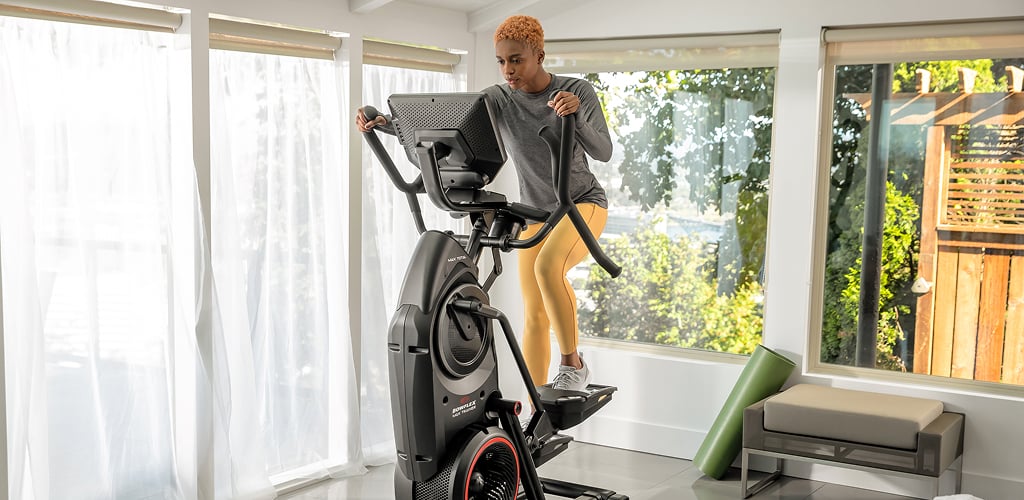
Want to Mix Up Your Low-Impact Cardio?
Incline walking on a treadmill is a fantastic foundation, but if you want for a machine that brings even more intensity to your low-impact routine, the BowFlex Max Total 16 is worth a serious look.
The Max Total 16 is a hybrid elliptical and stair stepper that delivers a full-body cardiovascular workout without the joint stress of running or high-impact training. Where incline walking primarily targets your lower body, the Max Total 16's six-grip adjustable handlebars pull your arms, shoulders, and back into the equation, which means that your entire body is working from the first step to the last. The vertically oriented step path also means your glutes, hamstrings, and calves are engaged with every stride, similar to the lower body activation you get from steep incline walking.
Ready to try incline walking? Explore the full BowFlex treadmill lineup and find the right fit for your home gym.
Explore the BowFlex Max Total 16 ⇒
FAQ: The Benefits of Incline Walking
Is incline walking as effective as running?
Incline walking can deliver comparable cardiovascular and lower body benefits to running — particularly for building endurance and lower body strength — while placing far less stress on your joints.
What incline is good for walking on a treadmill?
For general health and movement, 1-3% is a great starting point. For a more meaningful cardiovascular challenge and greater muscle engagement, 5-10% is a solid target range. Advanced walkers can train at 12-15% for a serious workout at slower speeds.
Does incline walking strengthen your glutes?
Yes, walking at steeper inclines significantly increases glute activation compared to flat walking. For the best results, combine incline walking with targeted glute and lower body strength exercises.
Can beginners do incline walking?
Absolutely. Incline walking is one of the most beginner-friendly workouts available. Start at 2-5% and a comfortable pace and build from there at your own speed.
How often should I do incline walking?
Three to five times per week is a great target for most people. Because it's low impact, your body recovers well between sessions, making it easier to stay consistent than higher-intensity forms of cardio.
What is the difference between the BowFlex Max Total 16 and a regular elliptical?
While a traditional elliptical focuses on a horizontal, gliding motion at moderate intensity, the Max Total 16 combines that smooth elliptical movement with the vertical climbing motion of a stair stepper. The result is a more demanding, full-body workout that engages your glutes and hamstrings, while also pulling in your arms, shoulders, and back. It's designed specifically for interval-style training, with 20 resistance levels that let you ramp intensity up and down without the impact on your joints.
Get workout inspiration, wellness tips, and the latest deals sent to your inbox.
The content on this blog is for informational and entertainment purposes only and should not be considered medical advice. This information is not a substitute for professional medical diagnosis, treatment, or advice. Always consult with your physician or another qualified healthcare provider before beginning any new exercise program, making changes to your fitness routine, or if you have questions about your health.