
Low Impact Strength Training: Build Muscle, Protect Your Joints, and Train for Life
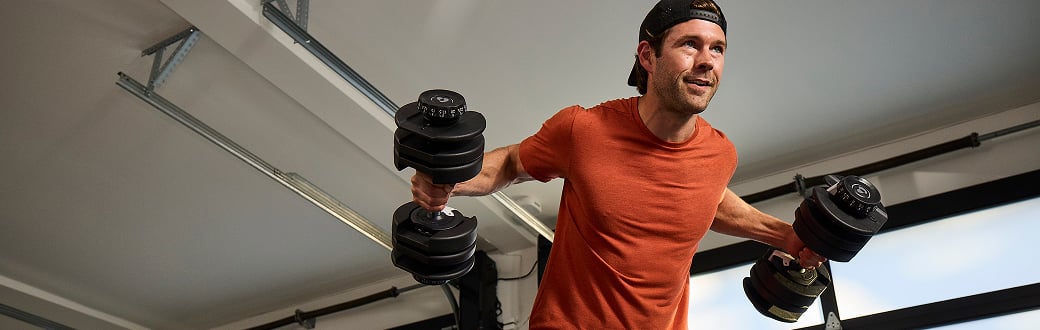
When it comes to exercise, low impact doesn't mean easy. In fact, low impact strength training is one of the most effective, science-backed approaches to building muscle, protecting your joints, and building consistency.
Whether you're brand new to strength training, getting back into working out after time away, or you're ready to try a routine that is easier on your joints, low impact exercise might be just what you need to add to your routine. Ahead, we break down everything you need to know about low impact strength training: what it is, why it works, the best exercises to try, and how to build a routine that will keep you motivated for the long haul.
What Is Low Impact Strength Training?
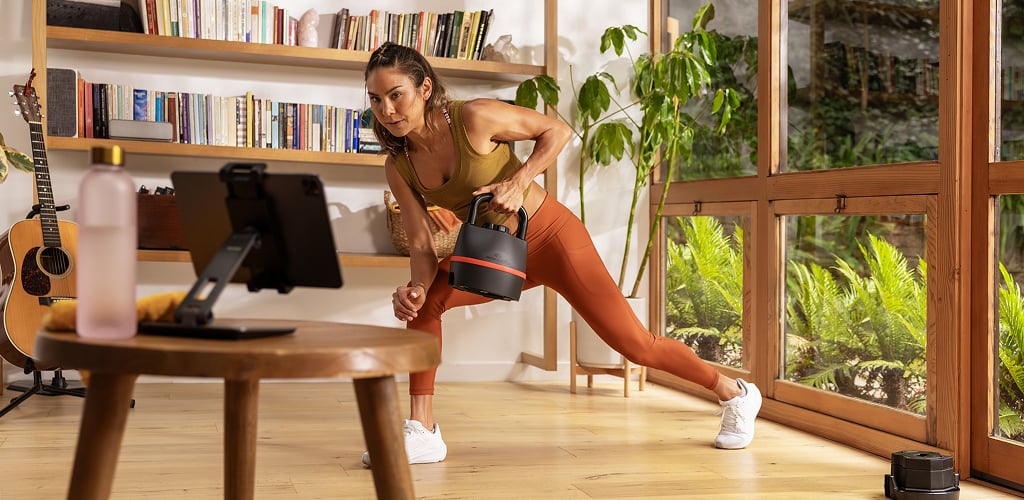
Low impact strength training is resistance-based exercise that builds muscle and strength while minimizing stress on your joints. It focuses on impact over intensity.
But low impact doesn't mean low effort. A slow, controlled Romanian deadlift or a weighted goblet squat with adjustable dumbbells can work your muscles without putting strain on your knees, hips, or spine. The difference is in how the movement is performed: controlled and intentional — not explosive.
Who Is Low Impact Strength Training For?
Low impact strength training is for everyone, but especially helpful for:
- Building a strong foundation. Starting with controlled, lower-impact movements lets you practice proper form before adding intensity.
- Injury recovery. Low impact training allows you to continue building strength and maintaining muscle without aggravating an injury that might still be healing.
- Long-term training. As we age, our connective tissue, tendons, and joints benefit from a smarter approach to exercise. Low impact training lets you continue to make progress while respecting how your body recovers.
- Building sustainable habits. You don't need to push 100% at each workout. Low impact training days allow you to maintain the momentum of your routine without overtaxing your nervous system.
The Benefits of Low Impact Strength Training
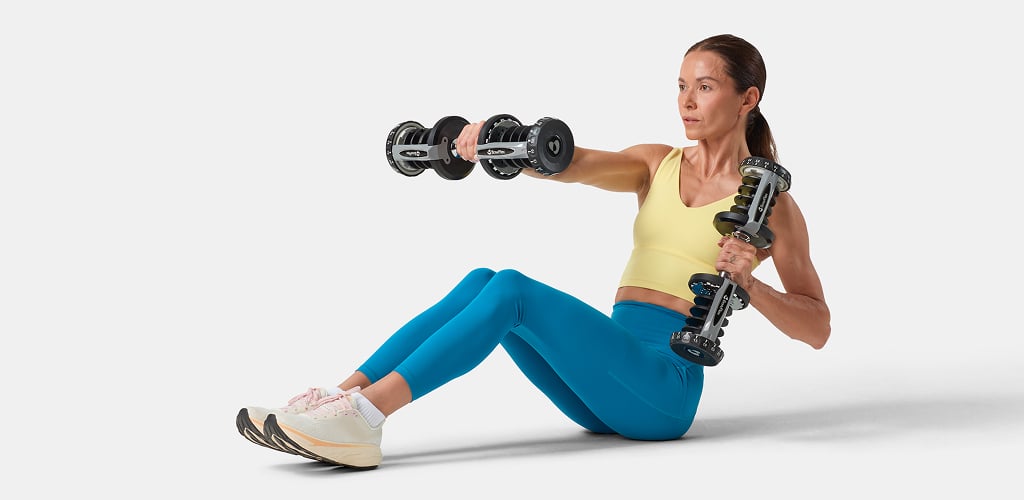
There are many benefits to low impact strength training, from short-term muscle gain to the longer-term benefits it can have on your longevity.
It Builds Real Muscle and Strength
Muscle development happens by challenging your muscles with resistance that increases over time, which is otherwise known as progressive overload.
Low impact training does exactly that. You don't need to jump, sprint, or lift heavy to build strength. You do need to challenge your muscles with appropriate resistance, recover thoughtfully, and progress consistently. Low impact training checks all three boxes.
For a foundational overview of how strength training works, check out our Beginner's Guide to Strength Training at Home.
It Supports Joint Health for the Long Term
Controlled movements strengthen the connective tissue, tendons, and cartilage around your joints. With this in mind, low impact strength training provides you with the building blocks that will keep you moving well as you age.
In fact, building muscular strength has been directly tied to increased longevity. So whether you're starting with bodyweight exercises, progressing with adjustable dumbbells, or already lifting heavy, you're not only supporting your health now, but well into the future.
It's Sustainable Enough to Actually Stick With
Low impact training allows for more consistent training frequency because recovery demands are lower. The more consistent you are with your training, the easier it will become to make exercise a long-lasting habit versus something you just stick with in the short term.
It Pairs Great with Other Training
Whether you're combining low impact strength workouts with incline walking, a HIIT session, a run on the treadmill, or any other form of cardio, low impact strength training slots in without competing for your recovery. It's the ideal complement to a balanced, long-term fitness routine.
The Best Low Impact Strength Training Exercises
Try incorporating these exercises a few times per week for a low impact, joint-friendly routine that will work all major muscle groups. Aim for 8-10 reps per exercise, with 30 seconds of rest between exercises. Complete 2-4 sets depending on how you feel.
Recommended Equipment: BowFlex Results Series adjustable dumbbells or kettlebell
Goblet Squat
Hold the weight (dumbbell or kettlebell) close to your chest, feet shoulder-width apart, toes slightly turned out. Lower slowly until your thighs are parallel to the floor, keeping your chest up and knees tracking over your toes. Drive through your heels to stand.
When You're Ready to Progress: Increase the weight you're using (the kettlebell adjusts from 8 to 40 lbs.) or add a 2-second pause at the bottom to increase time under tension.
Romanian Deadlift
Stand with feet hip-width apart, with dumbbells in each hand in front of your thighs. With a soft bend in your knees, hinge forward at the hips, pushing them back as you lower the weights along your legs until you feel a stretch in your hamstrings. Squeeze your glutes as you return to standing.
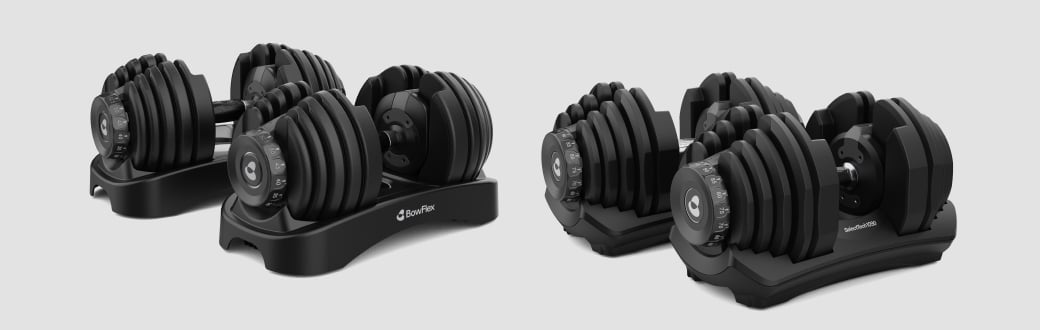
When You're Ready to Progress: Gradually increase the weight you're using for this exercise. The Results Series 552 dumbbells adjust up to 52.5 lbs. and the Results Series 1090 dumbbells go up to 90 lbs. per dumbbell.
Dumbbell Bent-Over Row
Hinge forward at the hips to about 45 degrees, soft bend in the knees, back flat. Let the dumbbells hang at arm's length, then drive your elbows back and up to bring the weights toward your ribcage. Lower with control.
When You're Ready to Progress: Add a 1-second squeeze at the top of each rep before lowering. Increase weight as the movement becomes comfortable.
Dumbbell Shoulder Press (Seated or Standing)
Hold dumbbells at shoulder height, palms facing forward. Press upward until arms are almost fully extended overhead, then lower with control to the starting position.
When You're Ready to Progress: Add a 3-second hold at the top of each rep before lowering. Increase weight as the movement becomes comfortable.
Glute Bridge
Lie on your back with knees bent and feet flat. Drive through your heels to lift your hips toward the ceiling, squeezing your glutes at the top. Hold for 1-2 seconds, then lower with control.
When You're Ready to Progress: Progress from bodyweight to holding a dumbbell across your hip crease.
Farmer's Carry
Hold a dumbbell in each hand at your sides, shoulders back and down, core braced. Walk slowly and deliberately for a set distance or time — 20-30 seconds is a solid starting point.
When You're Ready to Progress: Increase the weight you're holding or the duration of movement.
The Equipment That Makes It Easy
The most effective low impact strength training program is one you'll actually do consistently. That starts with having the right equipment at home. Here are our top picks to build out a home gym for all kinds of movement — including low impact:
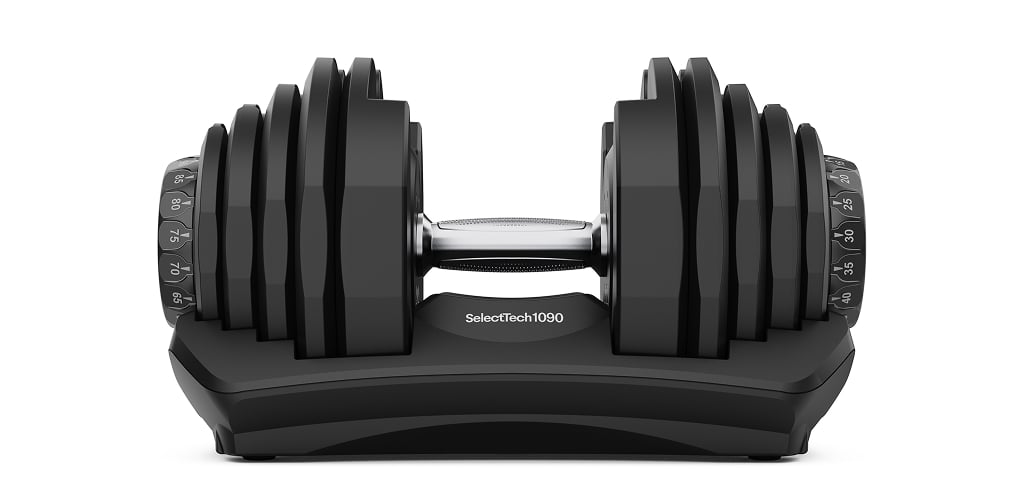
- BowFlex Results Series 552 SelectTech Adjustable Dumbbells — A pair of these space-saving adjustable dumbbells replaces 15 sets of weights. Adjust from 5 to 52.5 lbs with a turn of the dial. Durable metal plates, a secure locking system, and an ergonomic non-slip handle make them as reliable as they are convenient.
- BowFlex Results Series 1090 SelectTech Adjustable Dumbbells — When you're ready to go heavier, the 1090s adjust from 10 to 90 lbs. per dumbbell, replacing 17 sets of weights. Built for serious strength training, these are the long-term investment for lifters who will challenge themselves to keep progressing.
- BowFlex 840 Adjustable Kettlebell — If you're ready to add compound movements into your routine, this kettlebell adjusts from 8 to 40 lbs, replacing six kettlebells in a single, compact unit.
- BowFlex 5.1S Adjustable Weight Bench — An adjustable weight bench is a great addition to any home gym, and especially useful for completing weighted exercises seated or lying down.
FAQ — Low Impact Strength Training
Can you build muscle with low impact strength training?
Yes. Muscle growth is driven by mechanical tension and progressive overload, both of which are fully achievable through low impact training. Resistance-based exercise builds muscle regardless of whether the movement is high or low impact.
What is the difference between low impact and low intensity?
Low impact refers to movements that minimize force on your joints (squats versus jump squats, for example). Low intensity refers to effort level. Low impact training can be intense; it simply avoids the joint stress that comes with high-impact movement.
How many days a week should I do low impact strength training?
Two to four sessions per week is a solid, sustainable range for most people. Ensure you have at least one day of rest or active recovery between sessions.
What equipment do I need for low impact strength training at home?
A pair of adjustable dumbbells, like the BowFlex Results Series 552 SelectTech Dumbbells, is the most versatile starting point. Adding a kettlebell opens up functional training options. A bench or stable elevated surface expands your exercise variety further.
Ready to build strength the smart way? As the #1 adjustable dumbbell brand in the U.S., BowFlex combines space-saving design with quality you can trust. Explore BowFlex adjustable dumbbells and weights.
Get workout inspiration, wellness tips, and the latest deals sent to your inbox.
The content on this blog is for informational and entertainment purposes only and should not be considered medical advice. This information is not a substitute for professional medical diagnosis, treatment, or advice. Always consult with your physician or another qualified healthcare provider before beginning any new exercise program, making changes to your fitness routine, or if you have questions about your health.
You may also like:
How to Choose the Right Adjustable Dumbbell for Your Home Gym