
The 20-Minute Dumbbell Workout
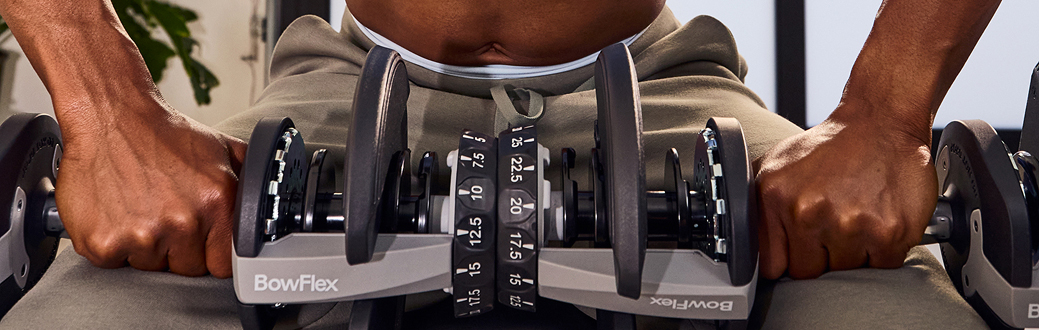
Twenty minutes. Three days a week. A single pair of dumbbells. That's all you need for an effective at-home strength workout. Ahead, BowFlex Fitness Advisor and Certified Personal Trainer Amy Kiser Schemper shares a 20-Minute Dumbbell Workout that will help you build muscle and support your total body fitness.
Why 20 Minutes is Enough
The most common fitness misconception is that longer workouts produce better results, but that isn't the case. It's consistent training that progressively challenges your muscles and cardiovascular system that produces results.
This 20-minute workout relies on compound movements, completed with adjustable dumbbells, that recruit multiple muscle groups at once, which leads to a more efficient workout.
"A good full-body workout should include all the major functional movement patterns: squat, hinge, lunge, upper-body push, and upper-body pull,” Amy explains. “These are functional movement patterns we use in life, so training for them not only builds muscle and strength but also helps us perform daily activities with ease and prevents injury. Compound exercises that incorporate multiple muscles at once not only save time but also keep your heart rate up for a cardiovascular workout while building strength."
The 20-Minute Dumbbell Workout
Structure: 3-4 sets of each exercise | Rest: 60-90 seconds between sets | Total Time: ~20 minutes
Warm-Up: Spend 3-5 minutes warming up before you begin. A warm-up is important because it increases blood flow to your muscles, improves range of motion, and reduces your risk of injury. Try a circuit of arm circles, leg swings, bodyweight squats, hip hinges, and light jumping jacks. You should feel your heart rate slightly elevated and your joints loose before starting your first set.
Workout Notes:
- Complete all sets of one exercise before moving on to the next. If you want to add a cardio element, superset two of the exercises by alternating between them with minimal rest.
- Reference the modifications and progressions offered for each movement, as needed.
Pushups (x12)
"Pushups build upper-body pushing strength while also improving core stability and shoulder control. They are a very functional movement that helps with everyday activities such as pushing, getting up from the floor, and maintaining posture. Because they require body control and coordination, they also improve overall muscular endurance," Amy says.
How to do it:
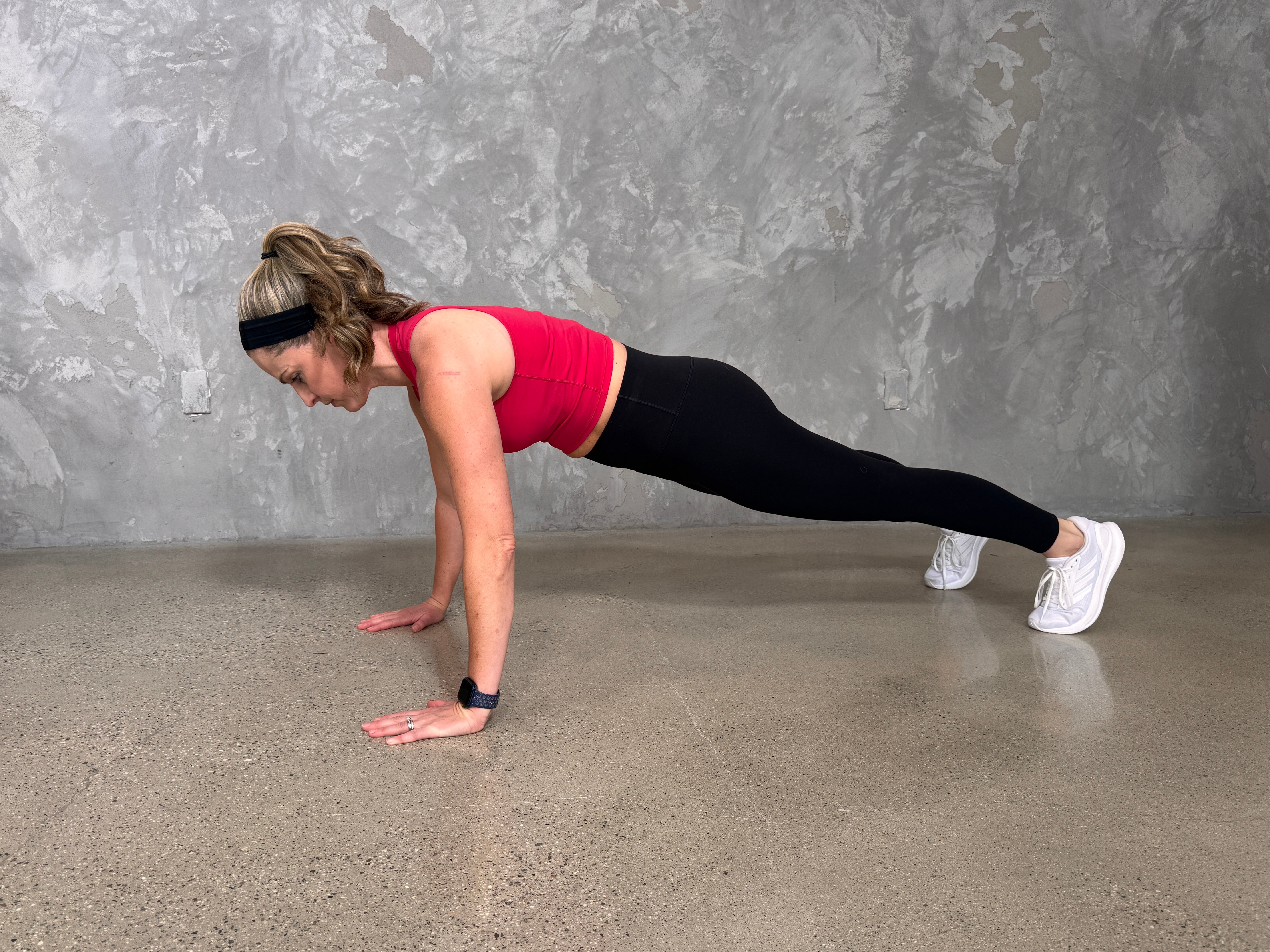
- Start in a high plank position with hands slightly wider than shoulder-width apart.
- Rotate your hands and wrists slightly out and elbows slightly in. Keep your body in a straight line from head to heels.
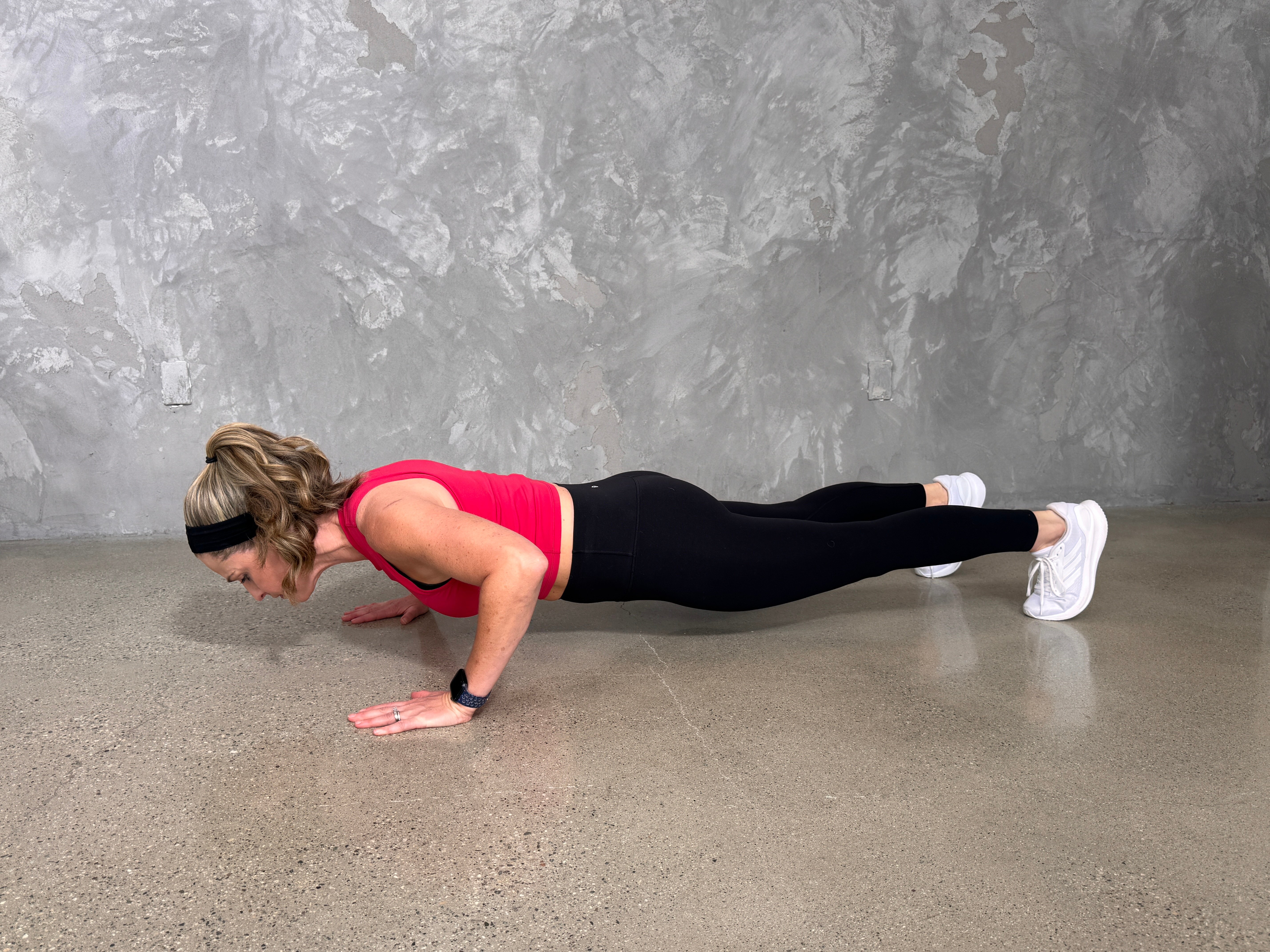
- Engage your core and lower your chest toward the floor by bending your elbows.
- Lower down as far as is comfortable for you, aiming for your chest to get close to the ground.
- Push through your palms to return to the starting position.
Modification options:
- Wall pushups (standing against a wall)
- Incline pushups using a bench or box or countertop
- Knee pushups
- Reduce range of motion
Progression options:
- Tempo pushups (slow lowering phase)
- Decline pushups
- Narrow grip (tricep) pushups
- Plyometric/power pushups
Bent-over rows (x12)
“Bent-over rows strengthen the muscles that support our spine and are directly responsible for posture and pulling movements. They help balance out pushing exercises like pushups and presses, reducing the risk of shoulder imbalances. Strong back muscles also support healthy posture, spinal stability, and lifting mechanics in everyday life. Pulling exercises are so important to combat hours of sitting over desks, leaning over phone screens, driving our cars, and other daily activities that pull us forward,” Amy says.
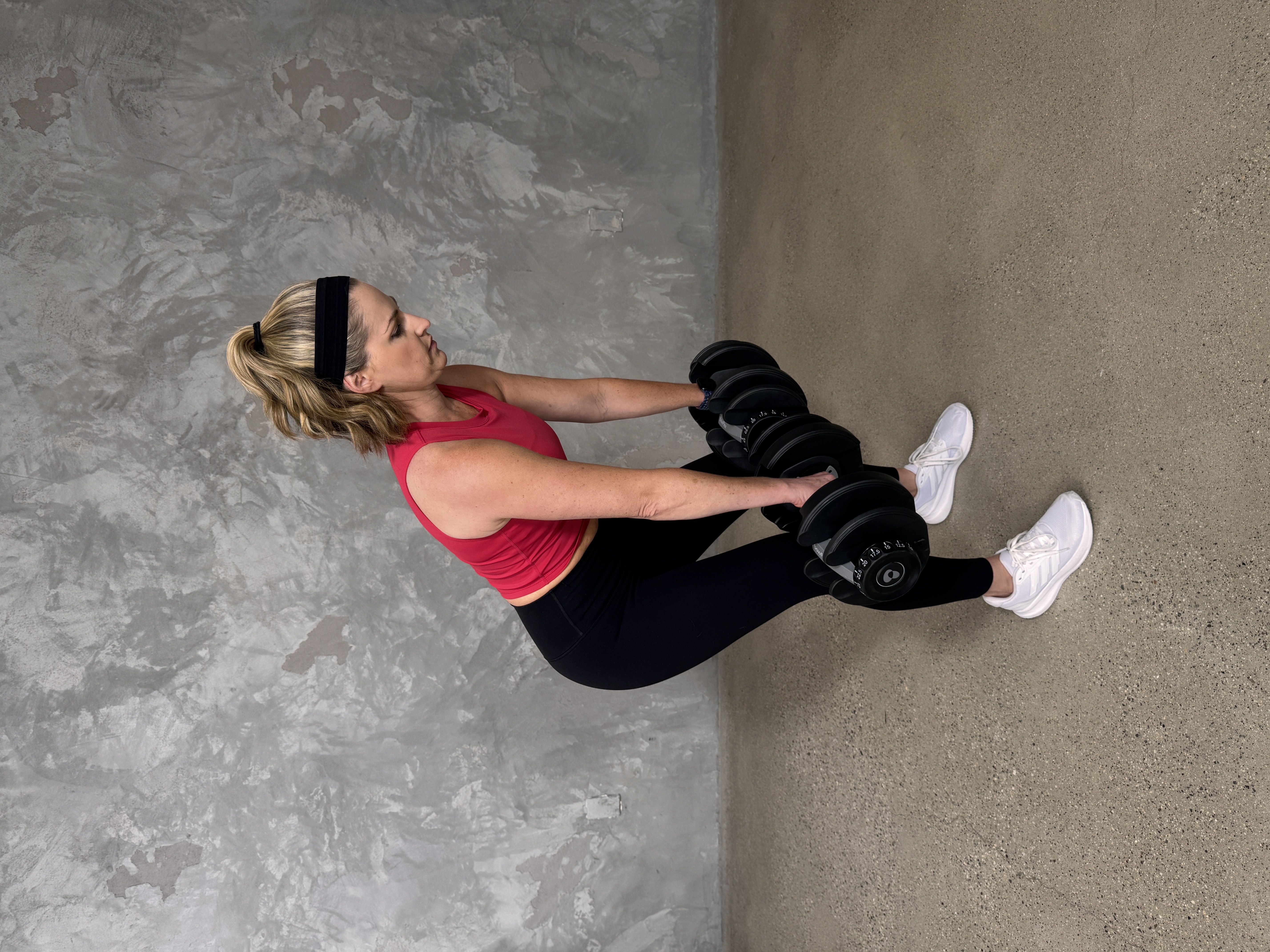
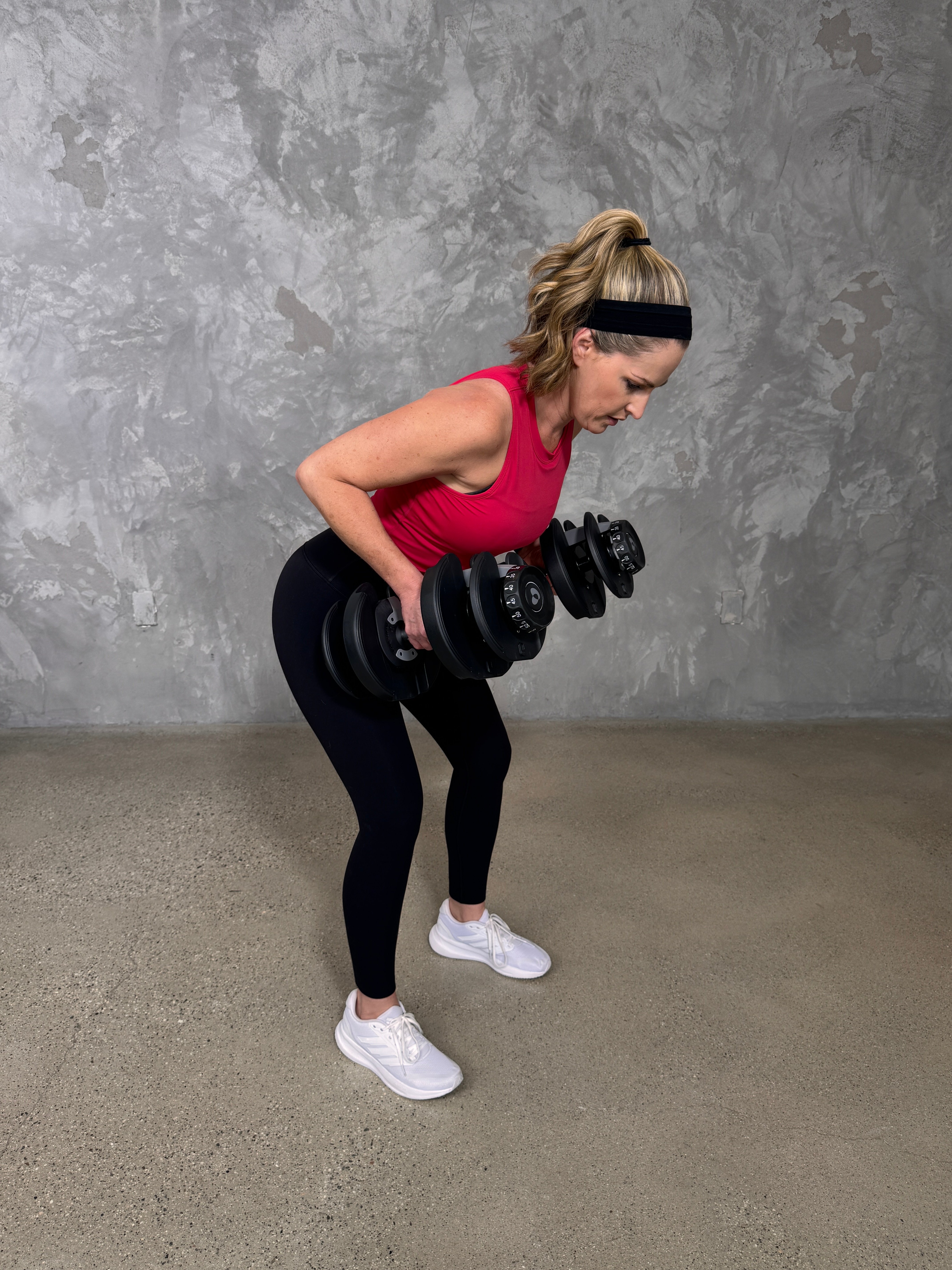
How to do it:
- Hold dumbbells with arms extended.
- Hinge at the hips with a slight bend in the knees and keep your back flat, with weights hanging in front.
- Keep the core engaged as you pull the weights toward your ribcage by driving your elbows backward.
- Squeeze your shoulder blades together at the top.
- Lower the weights slowly with control.
Modification options:
- Perform one arm at a time for more stability
- Place knee or hand on the bench for more stability
- Use one dumbbell between both hands
Progression options:
- Pause at the top of each rep
- Single-leg bent-over rows
- Renegade (plank) rows
Reverse Lunges (x6, each leg)
"Reverse lunges improve lower-body strength, balance, coordination, and stability. Stepping backward places less stress on the knees than forward lunges, making them a more joint-friendly option for many people. They also help correct strength imbalances between legs and improve functional movement patterns like walking up stairs or bending down to tie shoelaces," Amy says.
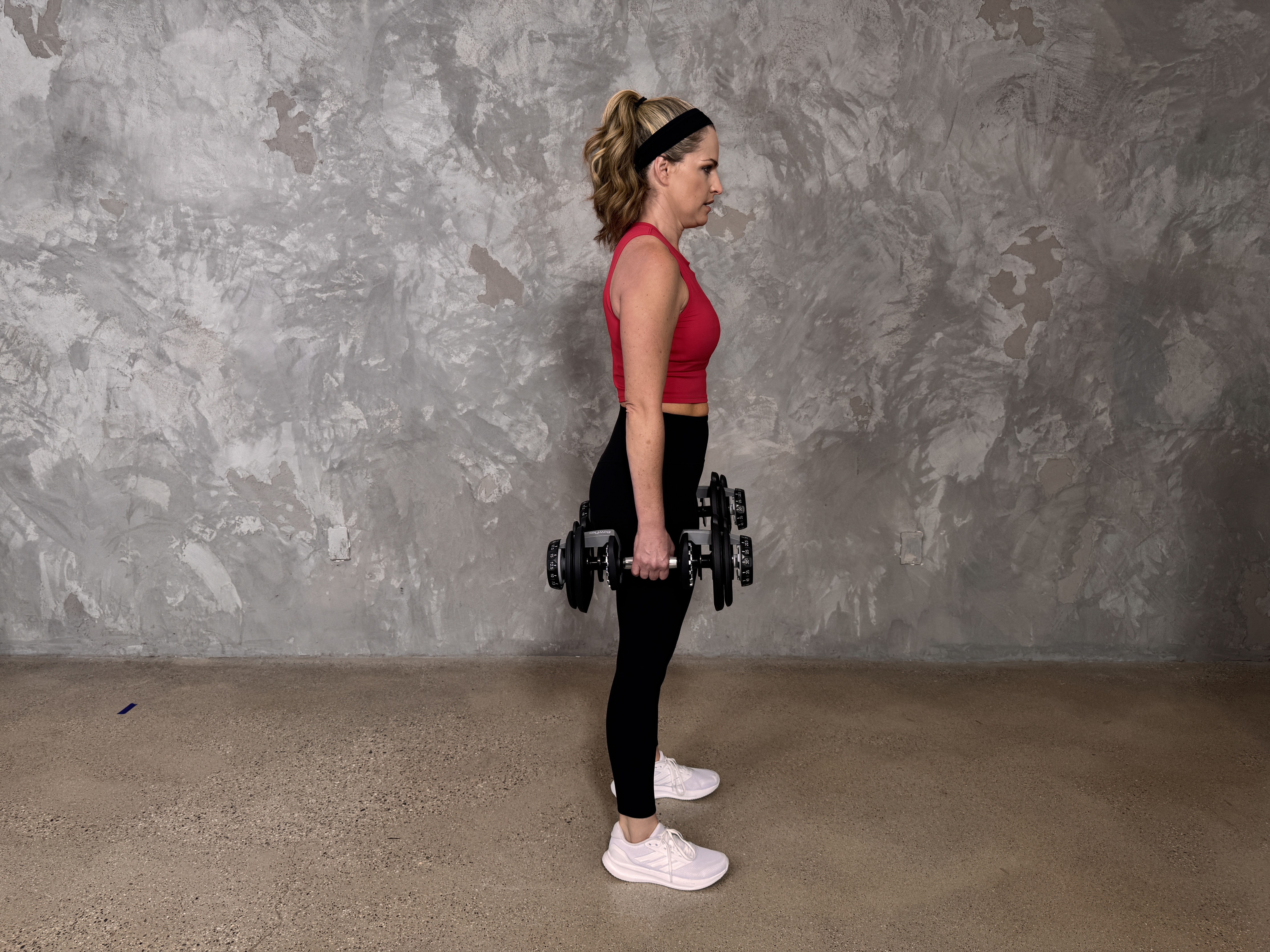

How to do it:
- Stand tall with feet hip-width apart, with dumbbells in each hand or resting on your shoulders in a racked position.
- Step one foot backward into a lunge position.
- Lower until both knees are bent around 90 degrees.
- Push through the front heel to return to standing.
Modification options:
- Hold onto a stable surface for balance
- Shorten the range of motion (don't go down as low)
- Bodyweight only
- Static split squat instead of stepping back
Progression options:
- Slow tempo reverse lunges
- Reverse lunge to knee drive
- Crossover/curtsy lunge
Biceps curls (x12)
"Biceps curls strengthen the muscles used for pulling, lifting, and carrying objects. Improved arm strength can support performance in other exercises such as rows and pull-ups, while also enhancing grip strength and upper-body muscular endurance," Amy explains.
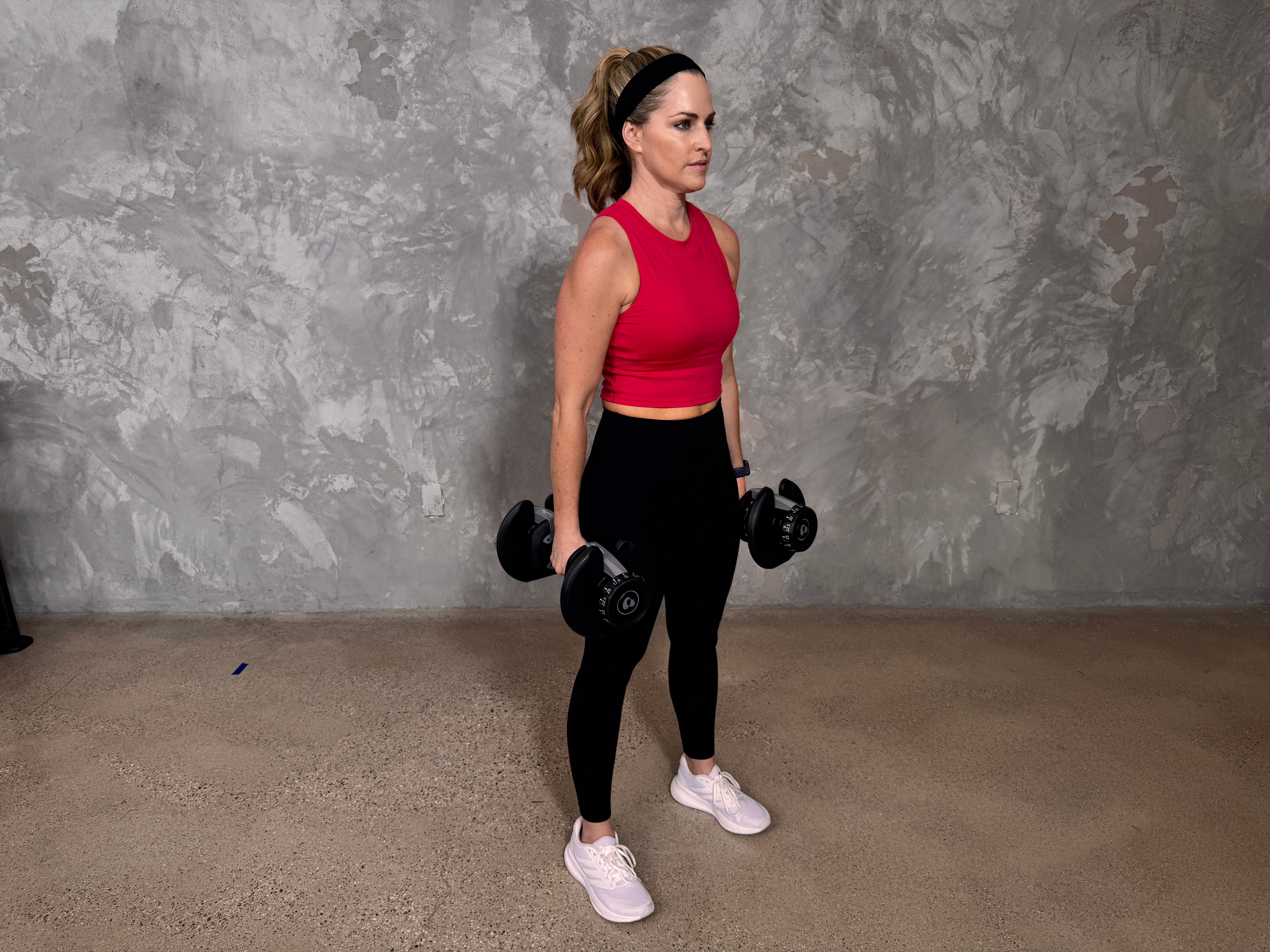
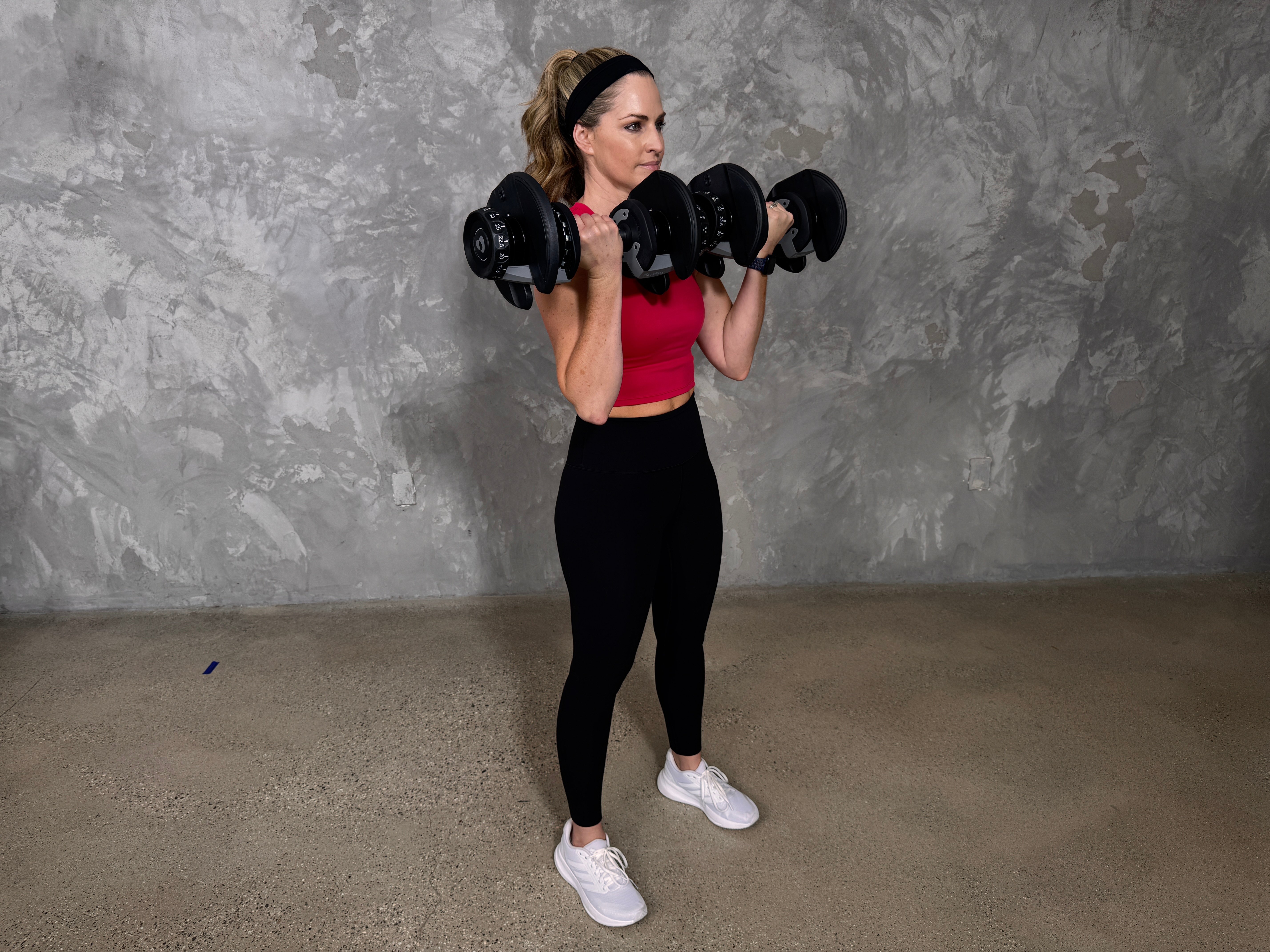
How to do it:
- Stand tall, holding dumbbells with palms facing in.
- Keep elbows close to your sides and core in tight.
- Curl the weights toward your shoulders and rotating palms in towards your chest.
- Squeeze the biceps at the top.
- Lower slowly and with control.
Modification options:
- Alternate arms
- Seated curls for more stability
- Hammer curls (palms turned in)
Progression options:
- Tempo curls with slow lowering
- Incline dumbbell curls
- Concentration curls
Thrusters (x12)
"Thrusters are a full-body exercise that combines lower-body, upper-body and core strength with cardiovascular endurance and power. They improve coordination, explosive power, and total-body conditioning while training the body to move efficiently through multiple movement patterns at once," Amy says.
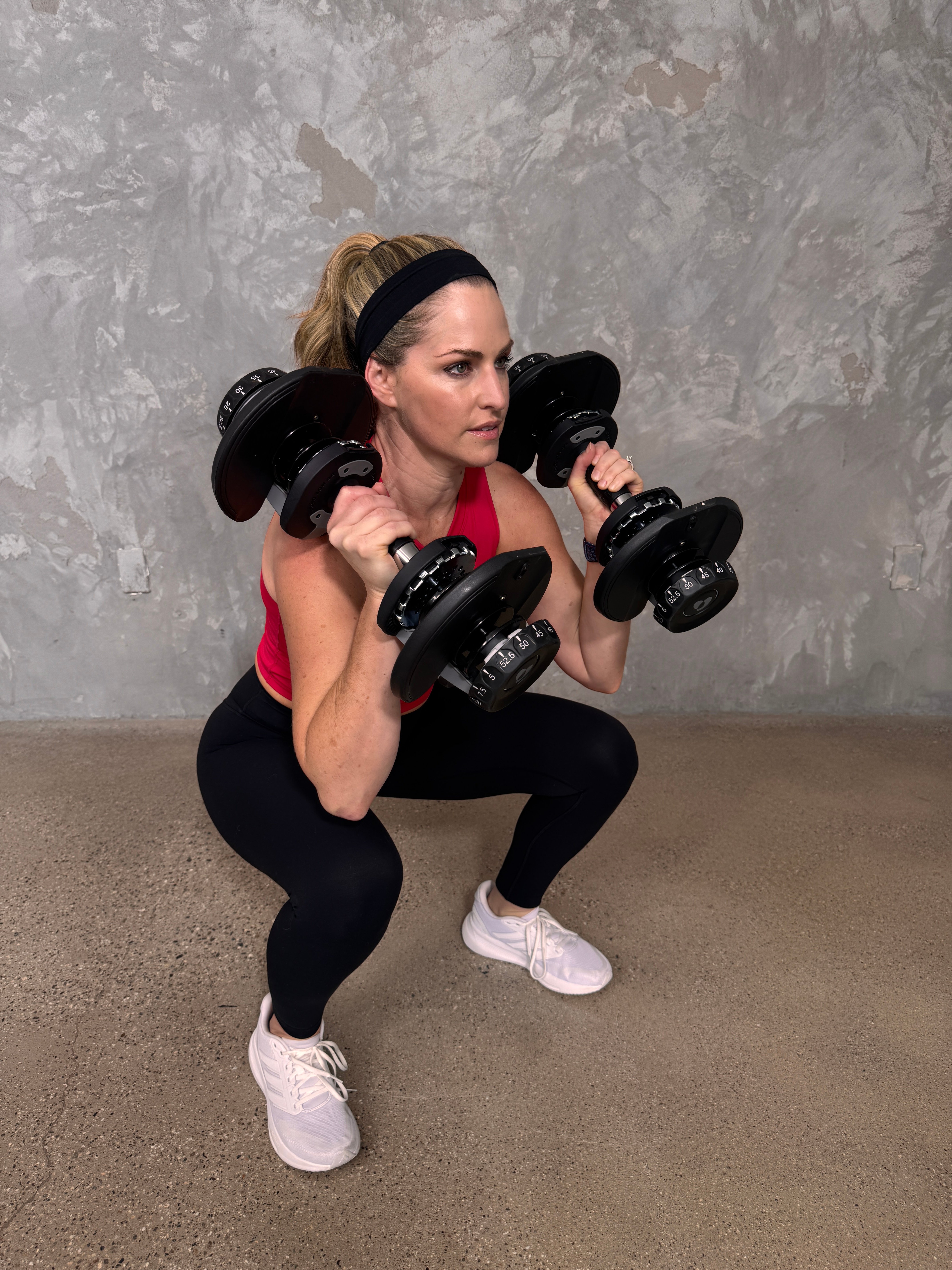
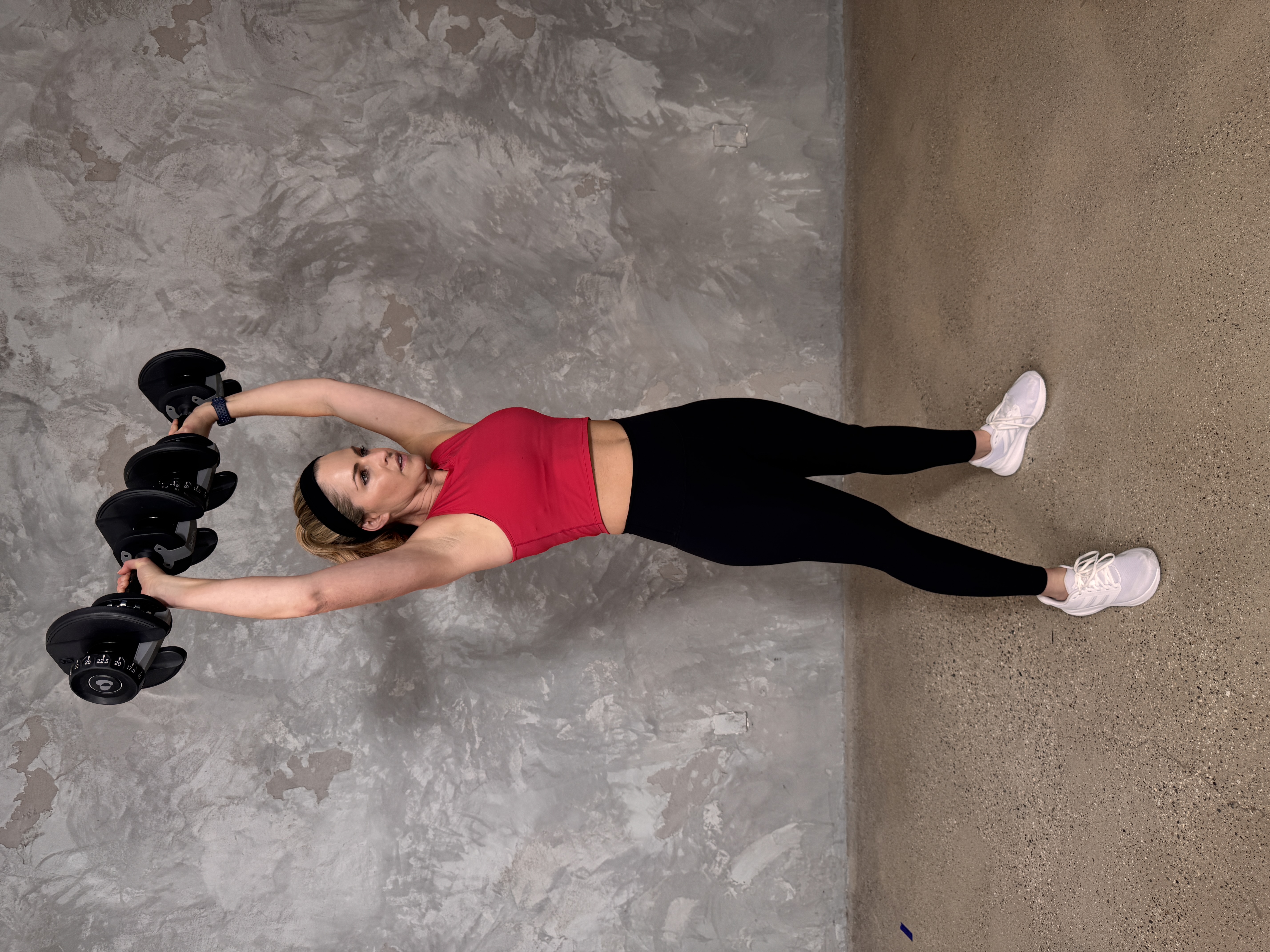
How to do it:
- Stand tall, holding dumbbells at shoulders in a racked position.
- Slowly lower into a squat position.
- Drive up through the legs with power, while thrusting the dumbbells overhead into a press.
- Return weights to shoulders and repeat.
Modification options:
- Bodyweight squat to overhead reach
- Use hammer grip (keep palms turned in)
- Reduce squat depth
- Perform squat and press separately
Progression options:
- Single-arm thrusters
- Tempo thrusters
- Add more power with a push press
Weighted sit-ups (x24)
"Weighted sit-ups strengthen the core and improve trunk control. A strong core supports posture, balance, and spinal stability while helping transfer force efficiently during athletic movements and daily activities. Adding weight increases strength demands and progression opportunities," Amy says.
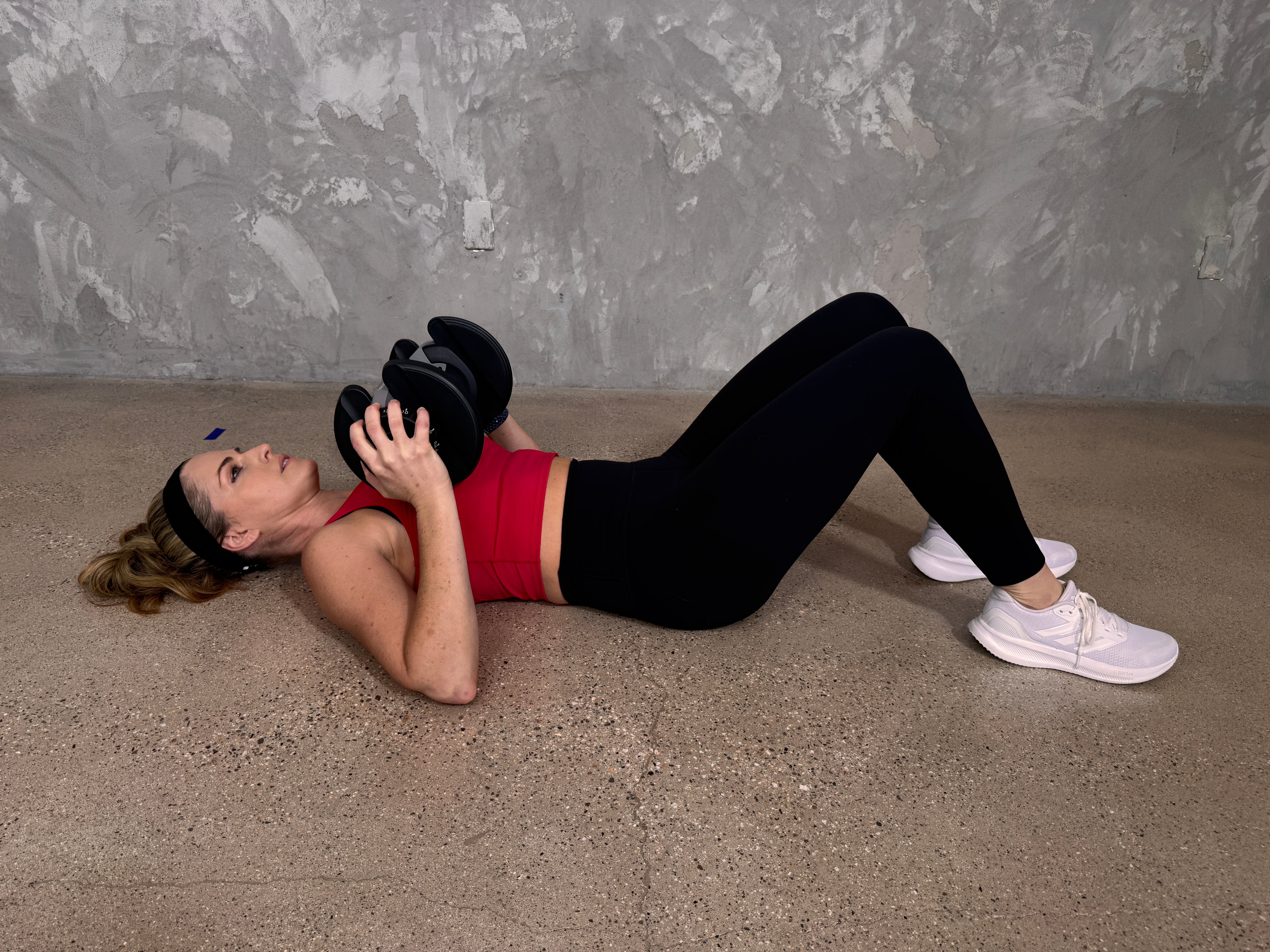
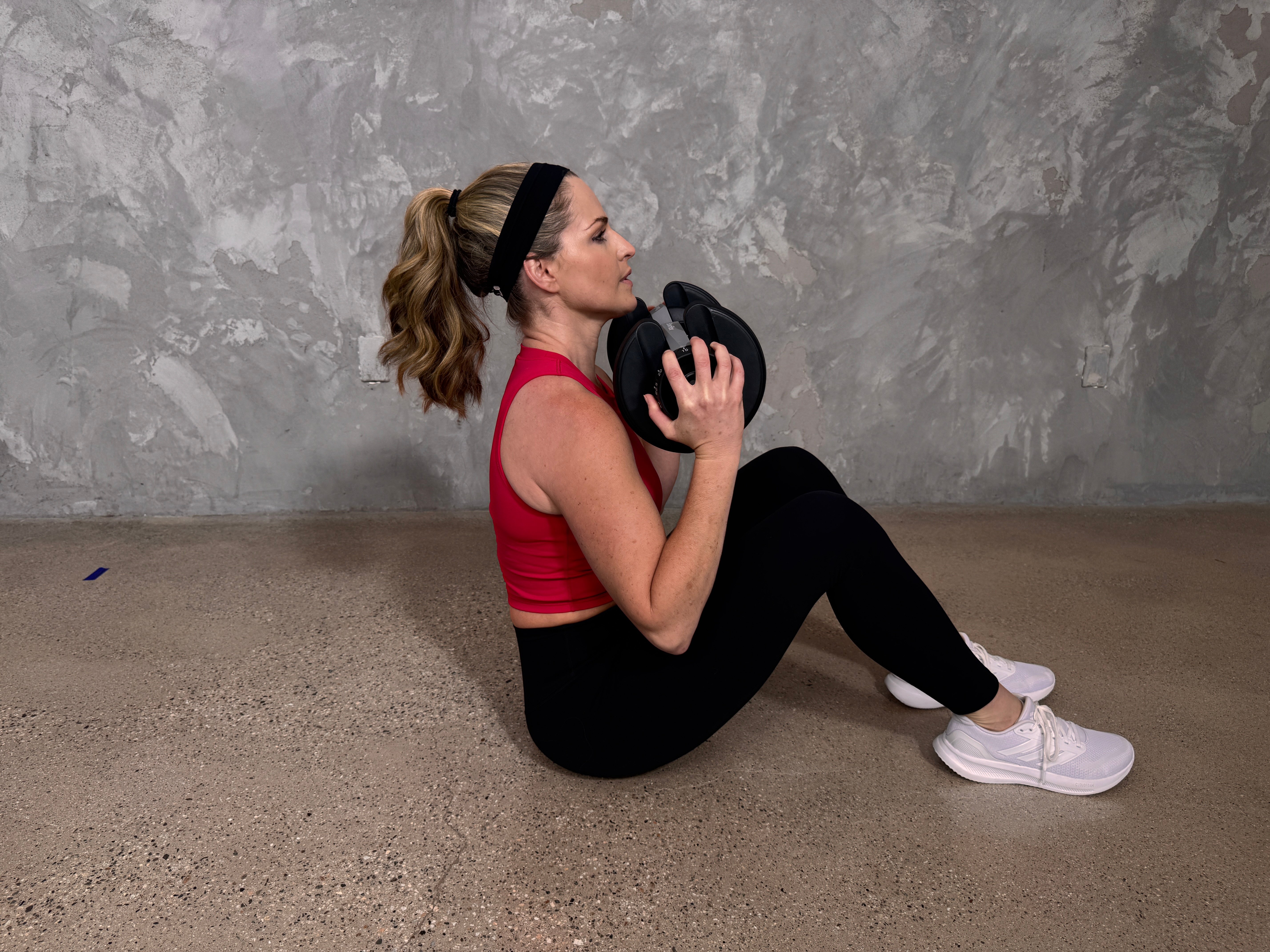
How to do it:
- Lie on your back with knees bent and feet flat on the floor (anchored if needed).
- Hold the dumbbell close to your chest.
- Tighten your core and sit up until your torso is upright.
- Lower back down slowly with control.
Modification options:
- Keep it bodyweight
- Reduce the range of motion by going halfway up or halfway down
Progression options:
- Slow eccentric lowering
- Add a press at the top
- Add a rotation (twist) at the top
All you need is 20 minutes
You don't need a gym membership, a full rack of fixed weights, or a two-hour block in your schedule. All you need is 20 focused minutes, a quality set of adjustable dumbbells, and the commitment to show up three times a week.
BowFlex adjustable dumbbells give you every weight you need in a single compact set, from your warm-up curls to your heaviest thrusters. The Results Series 552 and 52 dumbbells cover 5 to 52.5 lbs and replace 15 separate pairs, while the Results Series 1090 and 90 dumbbells cover 10 to 90 lbs per dumbbell for those ready to push further.
Frequently Asked Questions — 20-Minute Dumbbell Workout
Can you build muscle with only dumbbells in 20 minutes?
Yes. A 20-minute dumbbell workout can effectively build muscle when it uses compound movements that target multiple muscle groups simultaneously. Exercises like thrusters, bent-over rows, and reverse lunges recruit the major muscle groups and keep your heart rate elevated, delivering both strength and cardiovascular benefits in a short session.
How many days a week should I do this dumbbell workout?
This workout is designed to be performed three days per week. Allowing rest days between sessions gives your muscles time to recover and grow stronger, which is essential for long-term progress.
What weight dumbbells should I use for this workout?
Choose a weight where the last 2-3 reps of each set feel challenging while you can still maintain proper form. Adjustable dumbbells — such as the BowFlex Results Series — are ideal because you can easily increase resistance for heavier movements like thrusters and decrease it for isolation exercises like biceps curls.
Are these exercises safe for beginners?
Yes. Each exercise includes beginner-friendly modifications, such as wall pushups, bodyweight lunges, and bodyweight sit-ups, that reduce intensity while maintaining the movement pattern. Beginners should start with lighter weights and focus on form before increasing load.
What muscle groups does this 20-minute dumbbell workout target?
This workout targets all major muscle groups across the full body. Pushups and thrusters work the chest, shoulders, and triceps. Bent-over rows target the back and biceps. Reverse lunges and thrusters train the quads, hamstrings, and glutes. Weighted sit-ups and all standing exercises engage the core throughout.
Do I need a gym to do this workout?
No. This workout requires only a single pair of adjustable dumbbells and enough floor space to lunge and lie down. It is designed specifically for at-home training with minimal equipment.
What is the difference between a modification and a progression in this workout?
A modification makes an exercise easier or lower-impact, which is useful for beginners, those recovering from injury, or anyone learning a new movement. A progression increases the difficulty — through slower tempo, added complexity, or greater range of motion — for those who have mastered the standard version and want to continue advancing.
Get workout inspiration, wellness tips, and the latest deals sent to your inbox.
The content on this blog is for informational and entertainment purposes only and should not be considered medical advice. This information is not a substitute for professional medical diagnosis, treatment, or advice. Always consult with your physician or another qualified healthcare provider before beginning any new exercise program, making changes to your fitness routine, or if you have questions about your health.
Try this 20 Minute workout next
20-Minute Upper Body Workout